
a l


ate


a l
ate
TAILMATE
A pet-friendly map that extends into a city-wide support system, helping owners stay connected with their pets through everyday places.
ROLE
Product Designer
DOMAIN
Product Design
Service Design
UI/UX Design
TOOLS
Figma
TIMELINE
2025
3 months
CONTEXT
Being apart from our pets is no longer a choice, but a daily reality.
Urban living creates constant moments of separation. In cities like New York, this is shaped by work schedules, mobility, and environmental constraints. While pets remain at home, owners go about their day with a sense of responsibility and concern.
THE PROBLEM
With so many spaces and services in cities,
why does spending time together still feel difficult for pets and their owners?
Looking deeper into how this problem unfolds:

Being apart becomes the easier default.
When shared experiences feel uncertain or unsupported, leaving pets at home becomes the more practical choice.

Bringing pets into different spaces is often uncertain.
From environment to social response, owners lack a clear understanding of what to expect, making everyday outings harder to plan.

Pet-friendly doesn’t always mean truly supportive.
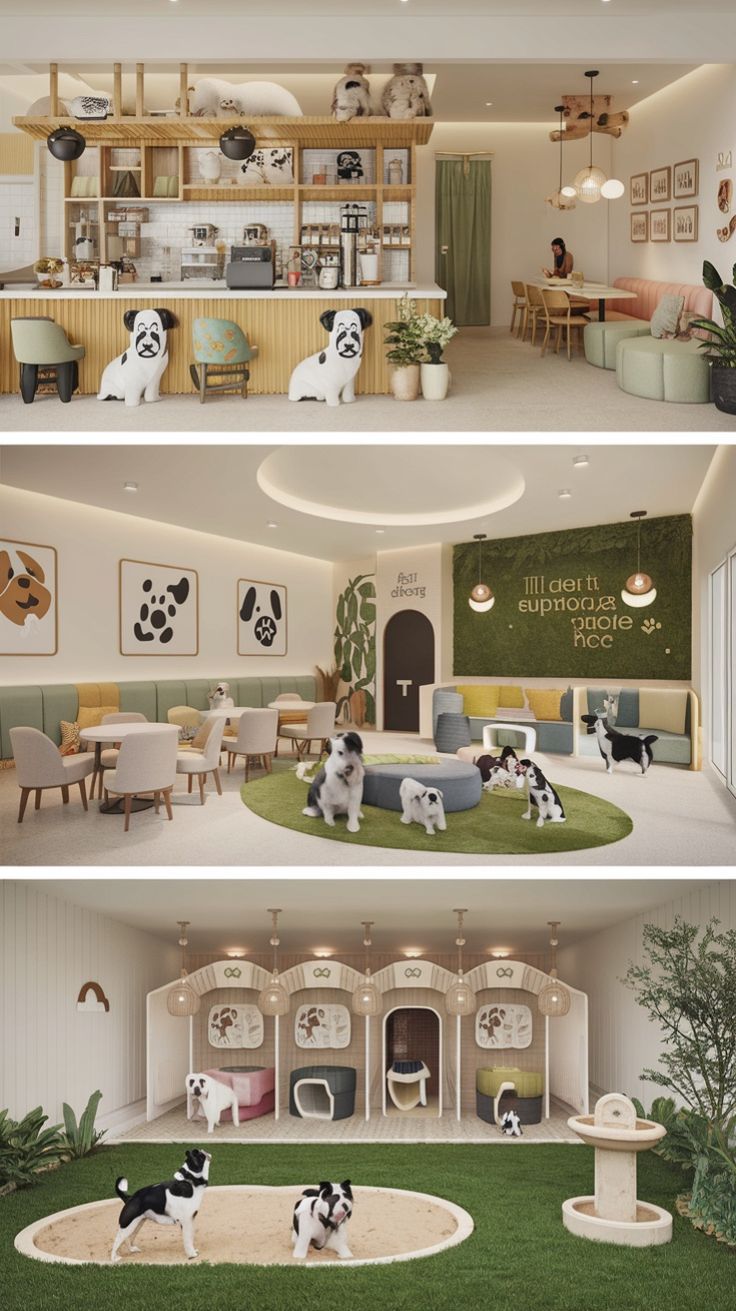
Although many places allow pets, they are rarely designed to support comfortable and low-stress companionship in practice.
What happens
Why it feels hard
What’s broken


RESEARCH
Identifying gaps in everyday pet companionship
Through interviews and a co-creation workshop—including activities such as charades, journey mapping, and scenario-based exercises, I explored how pet owners navigate everyday situations with their dogs.
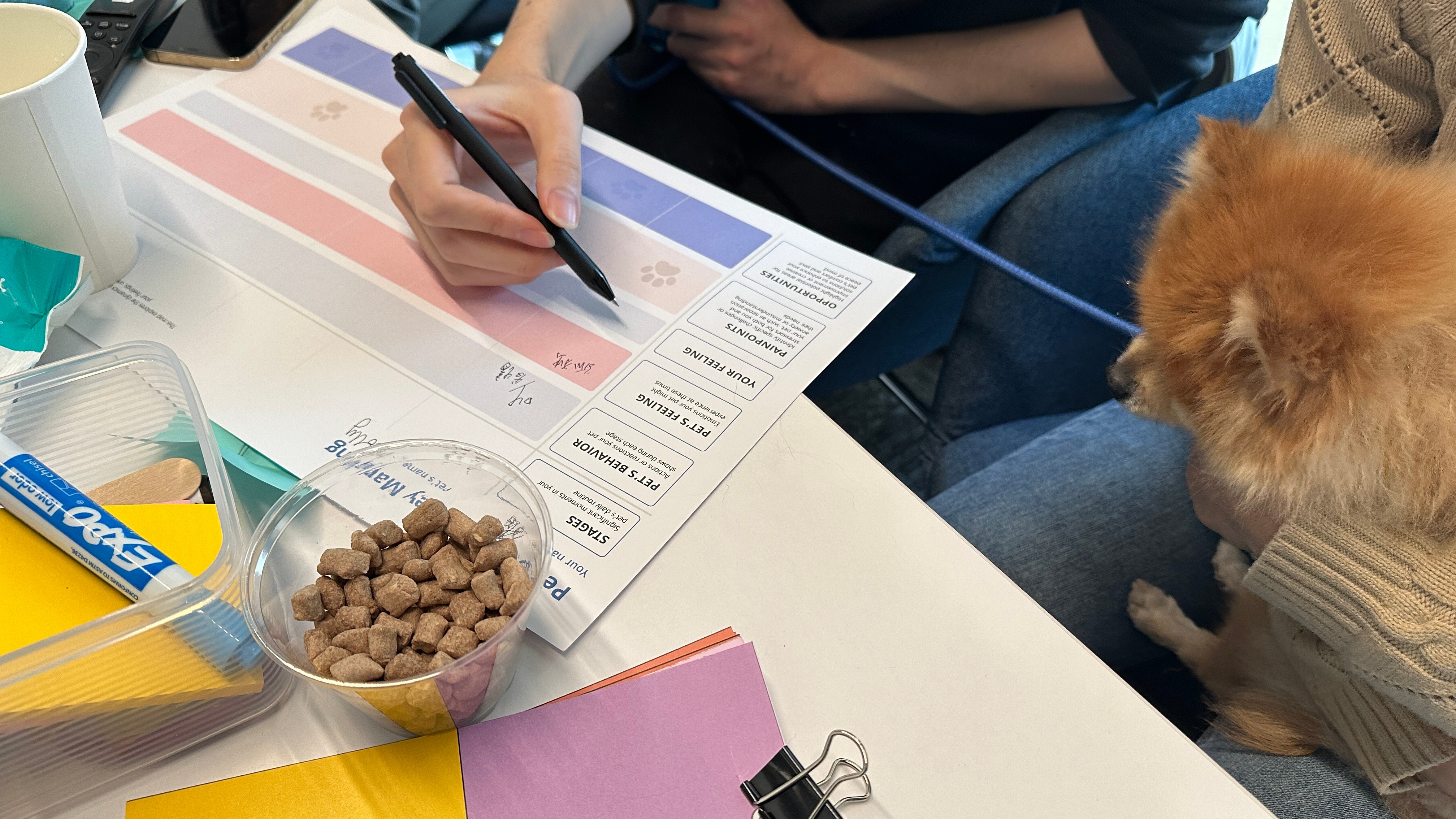
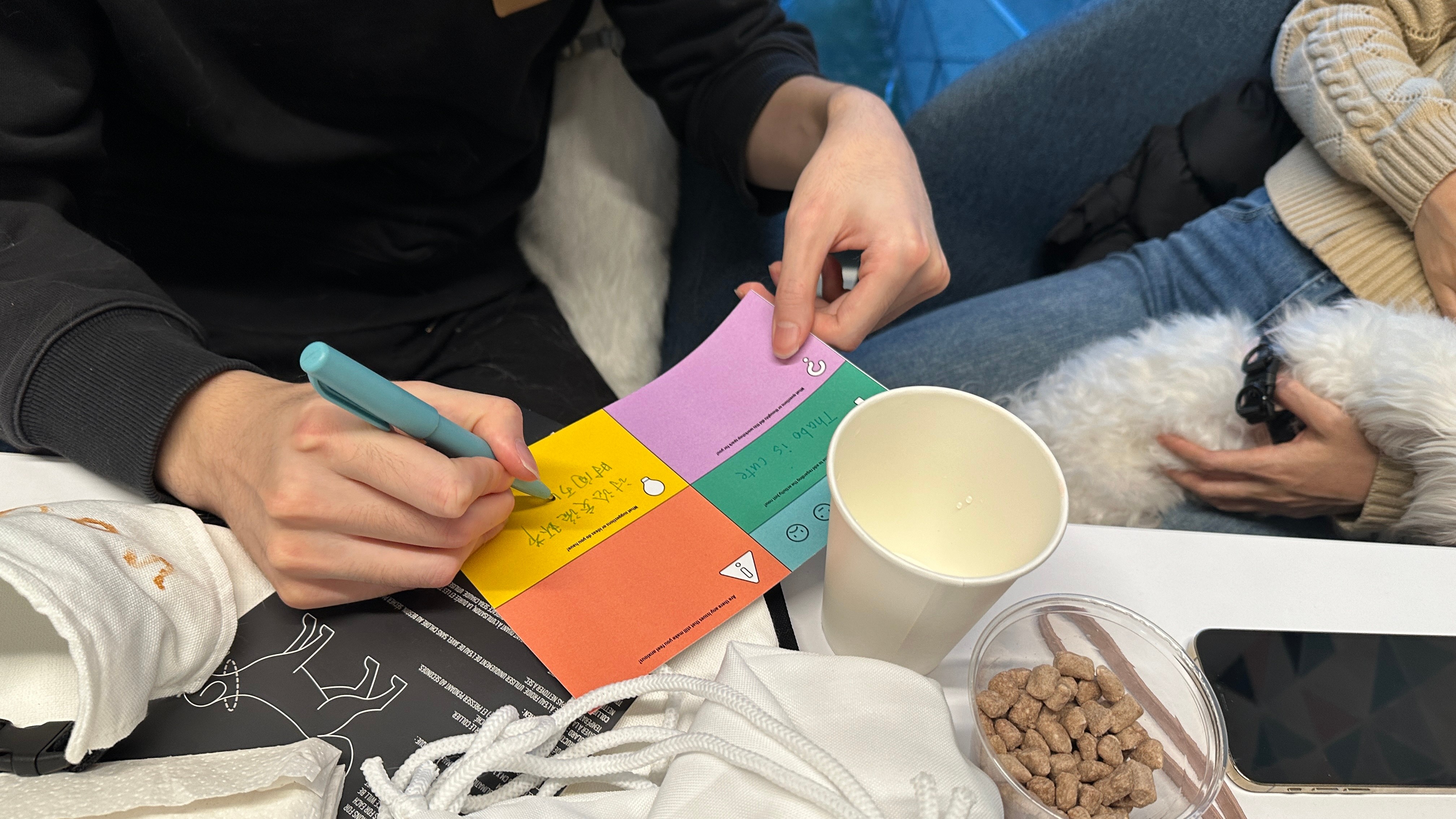
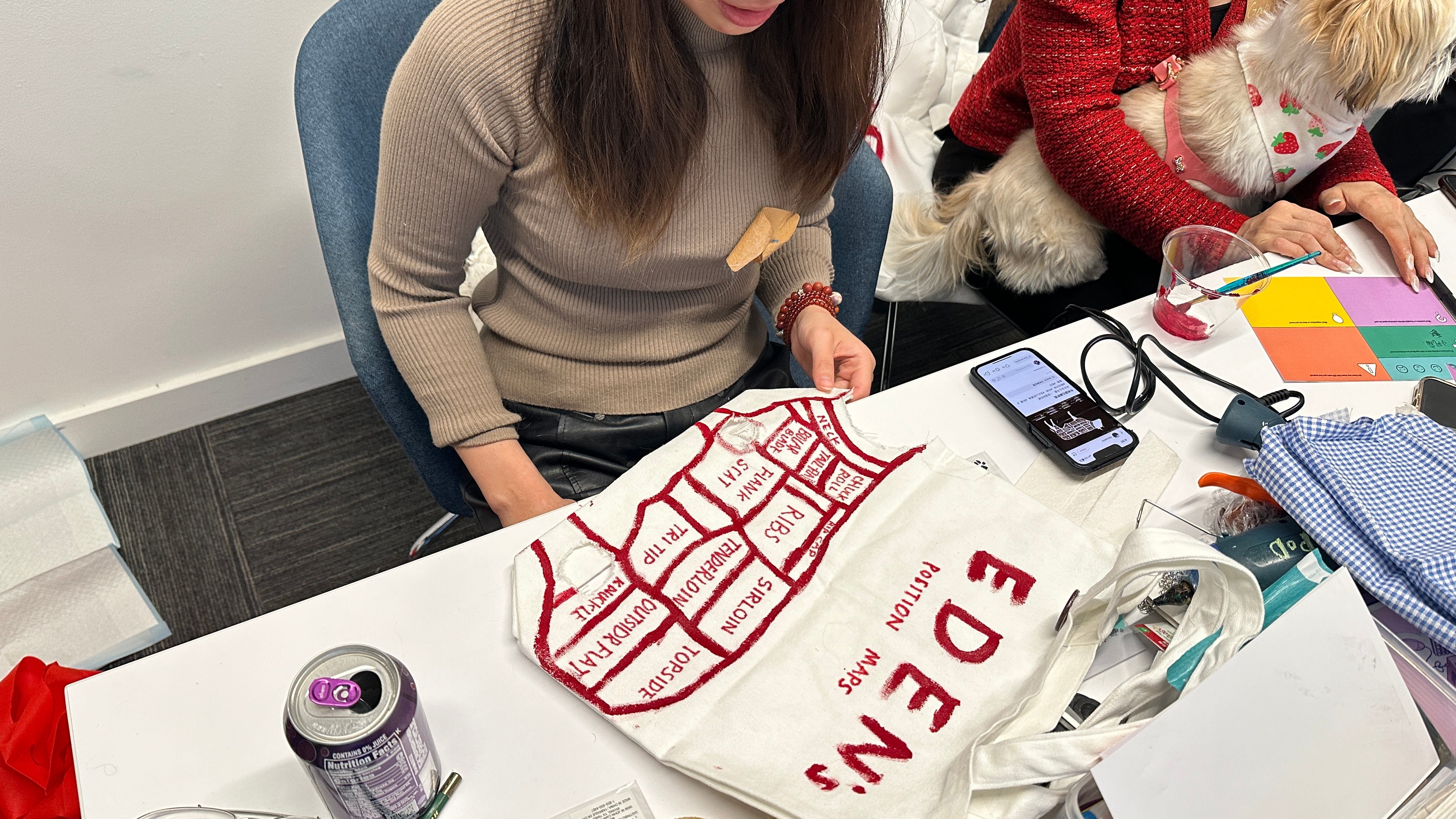
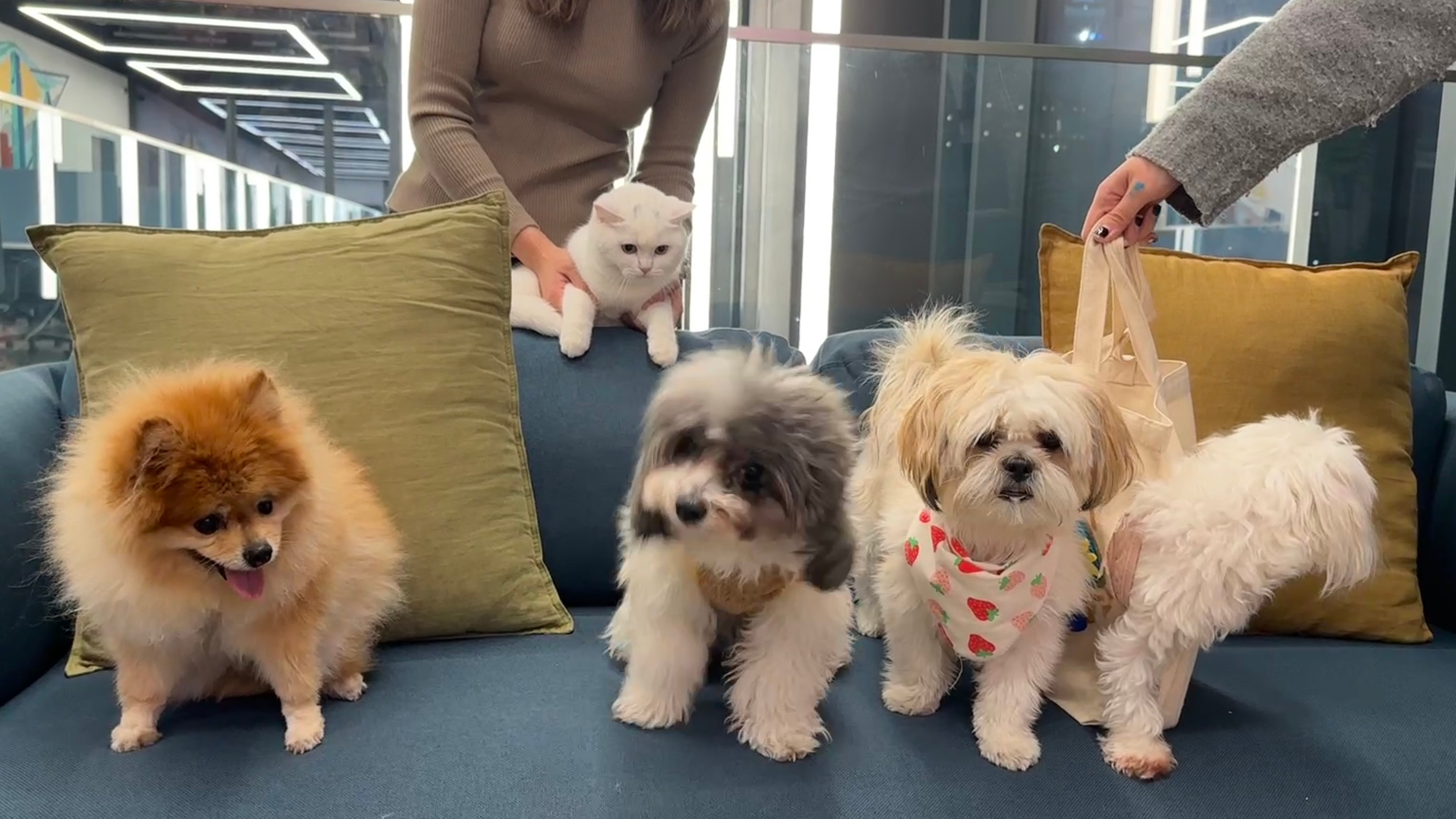
The workshop activities and conversations with pet owners highlighted a range of concerns and began to frame the focus of the design.
Rather than framing them as abstract design questions, I shifted toward capturing these experiences more directly through first-person expressions.
This shift grounded the problem in real contexts and helped clarify a more focused design direction.
“I always have to leave my dog at home alone for at least 8 hours everyday.”
It sucks that leaving my dog at home for long hours feels unavoidable.

“Sometimes I couldn’t understand what my dog is thinking about.”
It sucks that I’m not sure how my dog will react in different city environments.
“I hate that my dog just keeps barking when I am not at home.”
It sucks that I can’t tell what my dog is trying to express when I’m not there.
“I can’t take my dog with me to work or most public places.”
It sucks that I can’t include my dog in my daily routine.
“Going out with my dog can feel stressful.”
It sucks that going out with my dog feels like something I have to manage, not enjoy.
“Even when places say they’re pet-friendly, I’m not sure what that actually means.”
It sucks that ‘pet-friendly’ doesn’t always mean my dog will feel comfortable or welcome.
User Voice
Reframed Experience
User Voice
Reframed Experience
Together, these reflections point to a deeper issue:
shared experiences between pets and their owners are often constrained by environments that are not designed for them.
INSIGHTS
Spending time together isn’t the problem—it’s that most environments aren’t designed to support it.
Many spaces are labeled as pet-friendly, but they are rarely designed to accommodate both pets and their owners at the same time. As a result, being together often requires negotiation and adjustment, making separation the easier default.
SOLUTION OVERVIEW
A system that helps people and their pets explore the city together!
Tailmate helps people and their pets spend time together in the city by making it easier to find and access spaces that support shared experiences.
It brings together a pet-friendly map, local service partnerships, and a reward system to encourages more inclusive everyday routines.





a l


ate


Pet-Friendly Map
Service Partnerships
Engagement & Rewards
Local businesses & support
Incentives & interaction
SOLUTION
Pet-Friendly Map, helping users discover and evaluate pet-friendly spaces with confidence.
The map focuses not just on whether a place allows pets, but how well it supports shared experiences between pets and their owners.
01 Understanding each dog to personalize recommendations
The onboarding captures behavioral traits instead of generic attributes, allowing Tailmate to recommend places based on how each dog experiences environments rather than assumptions.
02 Making pet-friendly discovery more relevant
The map combines categories with personality-based filters, helping users quickly find places that better match their dog instead of browsing generic pet-friendly locations.
03 Supporting confident decisions before visiting
The detail page translates a dog’s traits into environmental insights, helping users understand why a place fits and what to consider before going.
04 Turning contributions into ongoing engagement
Small actions are prompted in context, such as tapping a reward indicator on a place page, to encourage reviews or photo sharing. These actions earn “bones” and build visible progress, motivating users to keep contributing over time.
05 Expanding beyond the app into a shared service system
TailMate connects pet owners and local businesses through a feedback-driven ecosystem. User contributions increase visibility for partners, while businesses provide more accessible, pet-friendly experiences, creating a loop that continuously improves over time.
DESIGN DECISIONS
Making personality the primary driver of discovery
Creates a more personalized and context-aware experience, shifting focus from places to the pet itself.
Calm
Energetic
Playful
Shy
Noise-sensitive
Alert
Outdoor-loving
Needs space
Curious
Social
Scent-sensitive
Enter the keyword

Add Tags
Reactive
Affectionate
Independent
Gentle
People-friendly
Easily Distracted
High Energy
Relaxed
Submit

Translating place information into scannable, behavior-based signals
Enables quick, low-effort decisions by making environments easy to scan and evaluate based on a dog’s needs.

4.8
Coffee Shop & Pet Shop · 1.5mi
Open 10:00-19:00

Good Match
Indoor seating (25)
Good for shy dogs (14)
Quiet environment
Moderate noise

“My dog stayed calm here even during busy hours.”
Green Yard Dog Café


Things to consider
- Can get busy during weekends
- Seating may be limited at peak hours
Indoor seating (25)
Good for shy dogs (14)
Moderate noise
Why it fits your dog
- Fits your dog’s
and
nature
calm
noise-sensitive
- Reduces overstimulation in unfamiliar environments
- Supports
outings
relaxed
low-effort
Using lightweight gamification to guide and motivate contribution
Introduces simple tasks, progress tracking, and rewards to make participation more engaging and easier to sustain over time.
Earn more bones and rewards!

Write 3 reviews 2/3

Visit 3 new places 2/3
Post 3 photos 1/3
Leave a review to earn rewards
See your rewards

Earn a bone!
Write a Review
Earn 2 bones

IMPACT & TAKEAWAYS
I adopted a dog during this project, which was honestly the best part!
- Designing for Individuals! Designing for dogs pushed me to move beyond assumptions, relying on research, observation, and real-life behaviors to inform more grounded decisions.
- Clarity over Complexity! Designing the map required distilling layered information into clear signals, so users can quickly form a direction without feeling overwhelmed.
- Designing with Feedback! Continuous feedback from pet owners reshaped decisions throughout the process, revealing gaps between assumptions and real needs.
Wanna know more?
This is just a part of the story, feel free to reach out if you’d like to hear more.
a l


ate


a l
ate
TAILMATE
A pet-friendly map that extends into a city-wide support system, helping owners stay connected with their pets through everyday places.
ROLE
Product Designer
DOMAIN
Product Design
Service Design
UI/UX Design
TOOLS
Figma
TIMELINE
2025
3 months
CONTEXT
Being apart from our pets is no longer a choice, but a daily reality.
Urban living creates constant moments of separation. In cities like New York, this is shaped by work schedules, mobility, and environmental constraints. While pets remain at home, owners go about their day with a sense of responsibility and concern.
THE PROBLEM
With so many spaces and services in cities,
why does spending time together still feel difficult for pets and their owners?
Looking deeper into how this problem unfolds:
Being apart becomes the easier default.
When shared experiences feel uncertain or unsupported, leaving pets at home becomes the more practical choice.
Bringing pets into different spaces is often uncertain.
From environment to social response, owners lack a clear understanding of what to expect, making everyday outings harder to plan.
Pet-friendly doesn’t always mean truly supportive.
Although many places allow pets, they are rarely designed to support comfortable and low-stress companionship in practice.
What happens
Why it feels hard
What’s broken


RESEARCH
Identifying gaps in everyday pet companionship
Through interviews and a co-creation workshop—including activities such as charades, journey mapping, and scenario-based exercises, I explored how pet owners navigate everyday situations with their dogs.
The workshop activities and conversations with pet owners highlighted a range of concerns and began to frame the focus of the design.
Rather than framing them as abstract design questions, I shifted toward capturing these experiences more directly through first-person expressions.
This shift grounded the problem in real contexts and helped clarify a more focused design direction.
“I always have to leave my dog at home alone for at least 8 hours everyday.”
It sucks that leaving my dog at home for long hours feels unavoidable.

“Sometimes I couldn’t understand what my dog is thinking about.”
It sucks that I’m not sure how my dog will react in different city environments.
“I hate that my dog just keeps barking when I am not at home.”
It sucks that I can’t tell what my dog is trying to express when I’m not there.
“I can’t take my dog with me to work or most public places.”
It sucks that I can’t include my dog in my daily routine.
“Going out with my dog can feel stressful.”
It sucks that going out with my dog feels like something I have to manage, not enjoy.
“Even when places say they’re pet-friendly, I’m not sure what that actually means.”
It sucks that ‘pet-friendly’ doesn’t always mean my dog will feel comfortable or welcome.
User Voice
Reframed Experience
User Voice
Reframed Experience
Together, these reflections point to a deeper issue:
shared experiences between pets and their owners are often constrained by environments that are not designed for them.
INSIGHTS
Spending time together isn’t the problem—it’s that most environments aren’t designed to support it.
Many spaces are labeled as pet-friendly, but they are rarely designed to accommodate both pets and their owners at the same time. As a result, being together often requires negotiation and adjustment, making separation the easier default.
SOLUTION OVERVIEW
A system that helps people and their pets explore the city together!
Tailmate helps people and their pets spend time together in the city by making it easier to find and access spaces that support shared experiences.
It brings together a pet-friendly map, local service partnerships, and a reward system to encourages more inclusive everyday routines.





a l


ate


Pet-Friendly Map
Service Partnerships
Engagement & Rewards
Local businesses & support
Incentives & interaction
SOLUTION
Pet-Friendly Map, helping users discover and evaluate pet-friendly spaces with confidence.
The map focuses not just on whether a place allows pets, but how well it supports shared experiences between pets and their owners.
01 Understanding each dog to personalize recommendations
The onboarding captures behavioral traits instead of generic attributes, allowing Tailmate to recommend places based on how each dog experiences environments rather than assumptions.
02 Making pet-friendly discovery more relevant
The map combines categories with personality-based filters, helping users quickly find places that better match their dog instead of browsing generic pet-friendly locations.
03 Supporting confident decisions before visiting
The detail page translates a dog’s traits into environmental insights, helping users understand why a place fits and what to consider before going.
04 Turning contributions into ongoing engagement
Small actions are prompted in context, such as tapping a reward indicator on a place page, to encourage reviews or photo sharing. These actions earn “bones” and build visible progress, motivating users to keep contributing over time.
05 Expanding beyond the app into a shared service system
TailMate connects pet owners and local businesses through a feedback-driven ecosystem. User contributions increase visibility for partners, while businesses provide more accessible, pet-friendly experiences, creating a loop that continuously improves over time.
DESIGN DECISIONS
Making personality the primary driver of discovery
Creates a more personalized and context-aware experience, shifting focus from places to the pet itself.
Calm
Energetic
Playful
Shy
Noise-sensitive
Alert
Outdoor-loving
Needs space
Curious
Social
Scent-sensitive
Enter the keyword

Add Tags
Reactive
Affectionate
Independent
Gentle
People-friendly
Easily Distracted
High Energy
Relaxed
Submit

Translating place information into scannable, behavior-based signals
Enables quick, low-effort decisions by making environments easy to scan and evaluate based on a dog’s needs.

4.8
Coffee Shop & Pet Shop · 1.5mi
Open 10:00-19:00
Good Match
Indoor seating (25)
Good for shy dogs (14)
Quiet environment
Moderate noise

“My dog stayed calm here even during busy hours.”
Green Yard Dog Café


Things to consider
- Can get busy during weekends
- Seating may be limited at peak hours
Indoor seating (25)
Good for shy dogs (14)
Moderate noise
Why it fits your dog
- Fits your dog’s
and
nature
calm
noise-sensitive
- Reduces overstimulation in unfamiliar environments
- Supports
outings
relaxed
low-effort
Using lightweight gamification to guide and motivate contribution
Introduces simple tasks, progress tracking, and rewards to make participation more engaging and easier to sustain over time.
Earn more bones and rewards!

Write 3 reviews 2/3

Visit 3 new places 2/3
Post 3 photos 1/3
Leave a review to earn rewards
See your rewards

Earn a bone!
Write a Review
Earn 2 bones

IMPACT & TAKEAWAYS
I adopted a dog during this project, which was honestly the best part!
- Designing for Individuals! Designing for dogs pushed me to move beyond assumptions, relying on research, observation, and real-life behaviors to inform more grounded decisions.
- Clarity over Complexity! Designing the map required distilling layered information into clear signals, so users can quickly form a direction without feeling overwhelmed.
- Designing with Feedback! Continuous feedback from pet owners reshaped decisions throughout the process, revealing gaps between assumptions and real needs.
Wanna know more?
This is just a part of the story, feel free to reach out if you’d like to hear more.
a l
ate
a l
ate
TAILMATE
A pet-friendly map that extends into a city-wide support system, helping owners stay connected with their pets through everyday places.
ROLE
Product Designer
DOMAIN
Product Design
Service Design
UI/UX Design
TOOLS
Figma
TIMELINE
2025
3 months
CONTEXT
Being apart from our pets is no longer a choice, but a daily reality.
Urban living creates constant moments of separation. In cities like New York, this is shaped by work schedules, mobility, and environmental constraints. While pets remain at home, owners go about their day with a sense of responsibility and concern.
THE PROBLEM
With so many spaces and services in cities,
why does spending time together still feel difficult for pets and their owners?
Looking deeper into how this problem unfolds:
Being apart becomes the easier default.
When shared experiences feel uncertain or unsupported, leaving pets at home becomes the more practical choice.
Bringing pets into different spaces is often uncertain.
From environment to social response, owners lack a clear understanding of what to expect, making everyday outings harder to plan.
Pet-friendly doesn’t always mean truly supportive.
Although many places allow pets, they are rarely designed to support comfortable and low-stress companionship in practice.
What happens
Why it feels hard
What’s broken


RESEARCH
Identifying gaps in everyday pet companionship
Through interviews and a co-creation workshop—including activities such as charades, journey mapping, and scenario-based exercises, I explored how pet owners navigate everyday situations with their dogs.
The workshop activities and conversations with pet owners highlighted a range of concerns and began to frame the focus of the design.
Rather than framing them as abstract design questions, I shifted toward capturing these experiences more directly through first-person expressions.
This shift grounded the problem in real contexts and helped clarify a more focused design direction.
“I always have to leave my dog at home alone for at least 8 hours everyday.”
It sucks that leaving my dog at home for long hours feels unavoidable.

“Sometimes I couldn’t understand what my dog is thinking about.”
It sucks that I’m not sure how my dog will react in different city environments.
“I hate that my dog just keeps barking when I am not at home.”
It sucks that I can’t tell what my dog is trying to express when I’m not there.
“I can’t take my dog with me to work or most public places.”
It sucks that I can’t include my dog in my daily routine.
“Going out with my dog can feel stressful.”
It sucks that going out with my dog feels like something I have to manage, not enjoy.
“Even when places say they’re pet-friendly, I’m not sure what that actually means.”
It sucks that ‘pet-friendly’ doesn’t always mean my dog will feel comfortable or welcome.
User Voice
Reframed Experience
User Voice
Reframed Experience
Together, these reflections point to a deeper issue:
shared experiences between pets and their owners are often constrained by environments that are not designed for them.
INSIGHTS
Spending time together isn’t the problem—it’s that most environments aren’t designed to support it.
Many spaces are labeled as pet-friendly, but they are rarely designed to accommodate both pets and their owners at the same time. As a result, being together often requires negotiation and adjustment, making separation the easier default.
SOLUTION OVERVIEW
A system that helps people and their pets explore the city together!
Tailmate helps people and their pets spend time together in the city by making it easier to find and access spaces that support shared experiences.
It brings together a pet-friendly map, local service partnerships, and a reward system to encourages more inclusive everyday routines.





a l


ate


Pet-Friendly Map
Service Partnerships
Engagement & Rewards
Local businesses & support
Incentives & interaction
SOLUTION
Pet-Friendly Map, helping users discover and evaluate pet-friendly spaces with confidence.
The map focuses not just on whether a place allows pets, but how well it supports shared experiences between pets and their owners.
01 Understanding each dog to personalize recommendations
The onboarding captures behavioral traits instead of generic attributes, allowing Tailmate to recommend places based on how each dog experiences environments rather than assumptions.
02 Making pet-friendly discovery more relevant
The map combines categories with personality-based filters, helping users quickly find places that better match their dog instead of browsing generic pet-friendly locations.
03 Supporting confident decisions before visiting
The detail page translates a dog’s traits into environmental insights, helping users understand why a place fits and what to consider before going.
04 Turning contributions into ongoing engagement
Small actions are prompted in context, such as tapping a reward indicator on a place page, to encourage reviews or photo sharing. These actions earn “bones” and build visible progress, motivating users to keep contributing over time.
05 Expanding beyond the app into a shared service system
TailMate connects pet owners and local businesses through a feedback-driven ecosystem. User contributions increase visibility for partners, while businesses provide more accessible, pet-friendly experiences, creating a loop that continuously improves over time.
DESIGN DECISIONS
Making personality the primary driver of discovery
Creates a more personalized and context-aware experience, shifting focus from places to the pet itself.
Calm
Energetic
Playful
Shy
Noise-sensitive
Alert
Outdoor-loving
Needs space
Curious
Social
Scent-sensitive
Enter the keyword
Add Tags
Reactive
Affectionate
Independent
Gentle
People-friendly
Easily Distracted
High Energy
Relaxed
Submit
Translating place information into scannable, behavior-based signals
Enables quick, low-effort decisions by making environments easy to scan and evaluate based on a dog’s needs.
4.8
Coffee Shop & Pet Shop · 1.5mi
Open 10:00-19:00
Good Match
Indoor seating (25)
Good for shy dogs (14)
Quiet environment
Moderate noise
“My dog stayed calm here even during busy hours.”
Green Yard Dog Café
Things to consider
- Can get busy during weekends
- Seating may be limited at peak hours
Indoor seating (25)
Good for shy dogs (14)
Moderate noise
Why it fits your dog
- Fits your dog’s
and
nature
calm
noise-sensitive
- Reduces overstimulation in unfamiliar environments
- Supports
outings
relaxed
low-effort
Using lightweight gamification to guide and motivate contribution
Introduces simple tasks, progress tracking, and rewards to make participation more engaging and easier to sustain over time.
Earn more bones and rewards!
Write 3 reviews 2/3
Visit 3 new places 2/3
Post 3 photos 1/3
Leave a review to earn rewards
See your rewards
Earn a bone!
Write a Review
Earn 2 bones
IMPACT & TAKEAWAYS
I adopted a dog during this project, which was honestly the best part!
- Designing for Individuals! Designing for dogs pushed me to move beyond assumptions, relying on research, observation, and real-life behaviors to inform more grounded decisions.
- Clarity over Complexity! Designing the map required distilling layered information into clear signals, so users can quickly form a direction without feeling overwhelmed.
- Designing with Feedback! Continuous feedback from pet owners reshaped decisions throughout the process, revealing gaps between assumptions and real needs.
Wanna know more?